










In industries driven by precision, durability, and innovation, the smallest details often determine the biggest outcomes. The concept of nahttypen—a term rooted in the classification of seam types—might initially sound confined to textiles or manufacturing. But in reality, nahttypen represents something far broader: a philosophy of structure, connection, and integrity that extends into modern engineering, product development, and even digital systems.
For startup founders, entrepreneurs, and tech professionals, understanding nahttypen is not about sewing techniques. It’s about recognizing how components—whether physical or digital—are joined together to create something reliable, scalable, and efficient. In a world where products must perform flawlessly under pressure, the way things connect matters just as much as the things themselves.
What Nahttypen Really Means in Today’s Context
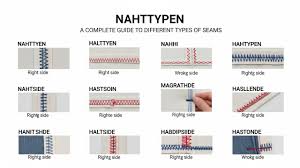
At its core, nahttypen refers to the classification of seams or joints used to connect materials. Traditionally, this concept has been applied in textiles, manufacturing, and construction. Different seam types serve different purposes—some prioritize strength, others flexibility, and some focus on aesthetics.
However, when viewed through a modern lens, nahttypen becomes a powerful metaphor for system design. Every product, whether a physical device or a digital platform, relies on connections. APIs link services, interfaces connect users to systems, and infrastructures bind components together.
In this sense, nahttypen is about choosing the right type of connection for the right purpose.
A poorly chosen seam in a garment can lead to tearing. Similarly, a poorly designed integration in a software product can lead to system failure. The principle is the same: the strength of the whole depends on the quality of its connections.
The Evolution of Nahttypen from Craft to Technology
Historically, nahttypen emerged from craftsmanship. Tailors and manufacturers developed specific seam types to address practical challenges—reinforcing stress points, improving comfort, or enhancing durability.
As industries evolved, these principles found their way into engineering disciplines. Mechanical joints, welding techniques, and structural connections all follow similar logic. Each type of joint is selected based on load, material, and environmental conditions.
Today, the concept extends even further into digital architecture. Software engineers, for example, must decide how systems communicate. Should components be tightly coupled for performance, or loosely connected for flexibility?
These decisions mirror the logic of nahttypen.
The evolution from physical seams to digital connections highlights a key insight: while tools and materials change, the underlying principles of connection remain constant.
Why Nahttypen Matters for Startups
Startups often focus heavily on features, speed, and market entry. While these are critical, the underlying structure of a product can determine its long-term success.
Nahttypen offers a framework for thinking about this structure.
When building a product, founders must consider how different components interact. A scalable architecture requires connections that can handle growth. A secure system requires connections that protect data integrity.
Ignoring these considerations can lead to costly problems later.
For example, a startup that builds its platform with tightly coupled components may achieve rapid initial development. However, as the product grows, making changes becomes increasingly difficult. This is similar to using a seam that is strong but inflexible—it works until it doesn’t.
By applying nahttypen principles early, startups can design systems that balance strength, flexibility, and scalability.
Types of Nahttypen and Their Broader Implications
To better understand how nahttypen translates into modern contexts, it helps to examine some traditional seam types and their conceptual equivalents.
| Traditional SeamType | Key Characteristic | Modern Interpretation | Use Case Example |
| Plain Seam | Simple and efficient | Basic integration | Standard API connections |
| Double Seam | Reinforced strength | Redundant systems | Backup servers, failover mechanisms |
| Flat Seam | Smooth and unobtrusive | Seamless user experience | Invisible UI transitions |
| Bound Seam | Protected edges | Secure connections | Encrypted data transfer |
| Stretch Seam | Flexible under pressure | Scalable architecture | Cloud-based microservices |
This table illustrates how traditional concepts can inform modern design decisions. Each type of seam reflects a different priority, and the same is true for system connections.
The key is alignment. The type of connection must match the demands of the application.
Nahttypen in Product Design and Engineering
In product design, nahttypen plays a crucial role in determining performance and user experience. Whether designing wearable technology, consumer electronics, or industrial equipment, engineers must carefully consider how components are joined.
A well-designed connection ensures durability and reliability. It also impacts aesthetics and usability. For instance, a visible seam may detract from a product’s visual appeal, while an invisible one can enhance it.
This principle extends to digital products as well. Users may not see the underlying architecture, but they experience its effects. Slow performance, glitches, or system failures often result from weak connections within the system.
By applying nahttypen thinking, designers and engineers can create products that not only function well but also feel cohesive.
The Role of Nahttypen in Scalability
Scalability is one of the most critical challenges for growing startups. As user demand increases, systems must handle higher loads without compromising performance.
This is where nahttypen becomes particularly relevant.
Different types of connections respond differently under stress. Some maintain integrity, while others fail. Understanding these dynamics allows teams to design systems that scale effectively.
For example, a microservices architecture can be seen as a form of stretch seam. It allows individual components to scale independently, providing flexibility and resilience.
On the other hand, monolithic architectures resemble rigid seams. They may offer simplicity initially but can become limiting as complexity grows.
Choosing the right approach depends on the startup’s goals, resources, and growth trajectory.
Challenges in Applying Nahttypen Principles
While the concept of nahttypen offers valuable insights, applying it in practice is not always straightforward.
One challenge is complexity. Modern systems often involve multiple layers of connections, each with its own requirements. Balancing these can be difficult.
Another challenge is trade-offs. No single type of connection is ideal for every situation. Strength may come at the cost of flexibility, while simplicity may limit scalability.
There is also the issue of foresight. Startups must make decisions early, often without knowing how their product will evolve. This makes it difficult to choose the optimal structure from the outset.
Despite these challenges, the key is intentionality. By consciously considering how components connect, teams can make more informed decisions.
Nahttypen and Innovation
Innovation is often associated with new features or technologies. However, some of the most impactful innovations come from improving how things are connected.
Nahttypen encourages this perspective.
By rethinking connections, startups can unlock new possibilities. For example, integrating systems in novel ways can create unique user experiences. Improving the efficiency of connections can enhance performance.
This approach shifts the focus from what a product does to how it works.
It also fosters creativity. When teams think about connections as design elements, they are more likely to experiment and innovate.
A Strategic Approach to Nahttypen
For founders and leaders, nahttypen is not just a technical concept—it’s a strategic one.
It influences decisions about architecture, partnerships, and product development. It shapes how a company builds and evolves its offerings.
A strategic approach involves:
Understanding the requirements of the system
Evaluating different types of connections
Balancing trade-offs between strength, flexibility, and scalability
Continuously refining the structure as the product grows
This approach ensures that the product remains robust and adaptable over time.
The Future of Nahttypen in a Connected World
As technology continues to advance, the importance of connections will only increase. From the Internet of Things (IoT) to distributed systems and beyond, the complexity of interactions is growing.
In this environment, nahttypen will become even more relevant.
Future systems will require connections that are not only strong and flexible but also intelligent. They will need to adapt in real time, respond to changing conditions, and maintain integrity under diverse scenarios.
This evolution will likely blur the lines between physical and digital connections even further. Products will become ecosystems, and the seams that hold them together will define their success.
Conclusion
Nahttypen may originate from the world of seams and stitching, but its relevance extends far beyond. It offers a powerful framework for understanding how connections shape performance, scalability, and innovation.
For startups, entrepreneurs, and tech professionals, this perspective is invaluable. It highlights the importance of structure and encourages a more thoughtful approach to building products.
In a landscape where complexity is the norm, the ability to design effective connections is a true competitive advantage.Ultimately, success is not just about what you build—it’s about how everything holds together. And that is exactly what nahttypen is all about.