









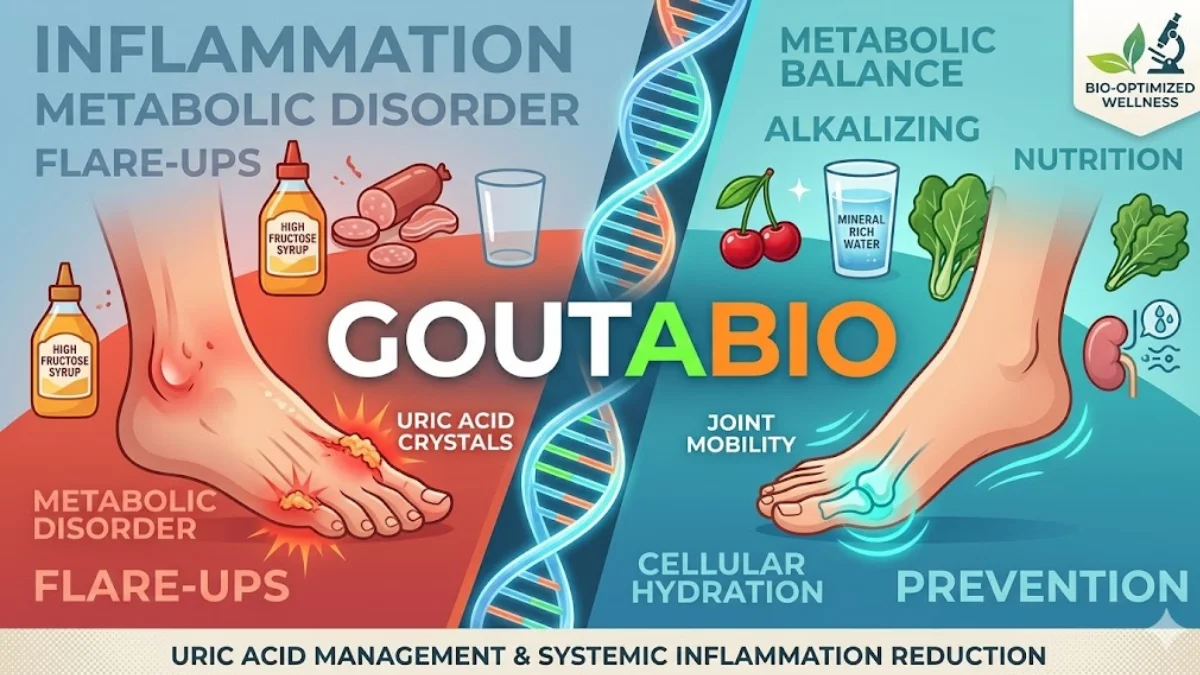
The next wave of innovation isn’t just happening in code repositories or cloud platforms—it’s unfolding at the intersection of biology and computation. That’s where goutabio enters the conversation. If you haven’t heard the term yet, you will. Goutabio represents a new way of thinking about biological systems as programmable, scalable, and data-driven environments—much like modern software ecosystems.
In a world where startups are racing to harness artificial intelligence, synthetic biology, and precision medicine, goutabio is emerging as a conceptual and practical framework that connects these domains. For founders, engineers, and digital strategists, understanding goutabio is less about scientific curiosity and more about recognizing where the next trillion-dollar opportunities may arise.
What Is Goutabio and Why It Matters
At its core, goutabio is about treating biological processes as information systems. Instead of viewing biology as something fixed and mysterious, it reframes it as something that can be modeled, analyzed, and even engineered using digital tools.
Think about how cloud computing transformed infrastructure. Before platforms became programmable, scaling was slow and expensive. Biology today is at a similar inflection point. Goutabio proposes that with the right data pipelines, machine learning models, and lab automation, biological experimentation can become faster, more predictable, and more scalable.
For entrepreneurs, this shift matters because it lowers barriers. You no longer need a massive pharmaceutical lab to explore biological innovation. With the right software stack and partnerships, startups can build solutions that were once the domain of large institutions.
The Convergence of Tech and Biology
To understand goutabio, you need to look at the convergence of three powerful trends: AI-driven analytics, cloud infrastructure, and biotech innovation. Each of these has matured independently, but their intersection is where the real transformation is happening.
Artificial intelligence allows researchers to process massive biological datasets—genomes, proteins, metabolic pathways—at unprecedented speed. Cloud platforms make that processing scalable and accessible. Meanwhile, advances in lab automation allow experiments to be executed with precision and repeatability.
Goutabio sits at this crossroads. It acts as a conceptual layer that integrates these technologies into a unified approach. For example, instead of running isolated experiments, teams can build continuous feedback loops where data informs experiments, and experiments generate new data for models.
This is not just theory. It’s already influencing how startups design products in healthcare, agriculture, and environmental science.
Goutabio in Real-World Applications
One of the strongest indicators that goutabio is more than a buzzword is its growing list of applications. Across industries, companies are beginning to adopt its principles to solve complex problems.
In healthcare, goutabio enables personalized medicine. By analyzing genetic data alongside lifestyle and environmental factors, companies can design treatments tailored to individuals. This moves us away from one-size-fits-all solutions toward precision care.
In agriculture, it helps optimize crop yields and resilience. By modeling plant biology and environmental conditions, startups can develop crops that are more resistant to climate change while requiring fewer resources.
Environmental tech is another area where goutabio shines. From carbon capture to waste management, biological systems can be engineered to address sustainability challenges in ways that traditional engineering cannot.
These applications highlight a key insight: goutabio isn’t confined to a single industry. It’s a foundational approach that can be applied wherever biology plays a role.
How Goutabio Transforms Startup Strategy
For startup founders, goutabio isn’t just a technical concept—it’s a strategic advantage. It changes how products are built, how teams are structured, and how markets are approached.
Traditional biotech startups often face long development cycles and high costs. Goutabio introduces a more agile model. By leveraging data and automation, teams can iterate faster and reduce uncertainty.
This has implications for funding as well. Investors are increasingly drawn to startups that combine deep tech with scalable platforms. Goutabio-driven companies fit this profile because they blend biology with software economics.
Another important shift is talent. Teams are no longer composed solely of biologists or engineers. Instead, they require interdisciplinary expertise—data scientists, software developers, and domain specialists working together.
Key Components of a Goutabio Ecosystem
To better understand how goutabio operates in practice, it helps to break down its core components. These elements form the backbone of any goutabio-driven initiative.
| Component | Role in Goutabio Ecosystem | Business Impact |
| Data Infrastructure | Collects and organizes biological data | Enables scalable analysis |
| AI & Machine Learning | Extracts insights and predicts outcomes | Accelerates decision-making |
| Lab Automation | Executes experiments with precision | Reduces cost and time |
| Cloud Computing | Provides scalable processing power | Supports rapid growth |
| Interdisciplinary Teams | Combines expertise across domains | Drives innovation |
This table illustrates that goutabio is not a single technology but a system of interconnected capabilities. Success depends on how well these components are integrated.
Challenges and Limitations
Despite its promise, goutabio is not without challenges. One of the biggest hurdles is data quality. Biological data can be noisy, incomplete, and difficult to standardize. Without reliable data, even the most advanced models will struggle.
Regulation is another factor. Industries like healthcare and agriculture are heavily regulated, which can slow down innovation. Startups must navigate complex approval processes while maintaining compliance.
There’s also the issue of accessibility. While goutabio lowers some barriers, it still requires significant expertise and resources. Not every startup can immediately adopt this approach.
However, these challenges are not insurmountable. In many ways, they mirror the early days of cloud computing and AI. Over time, tools and frameworks are likely to evolve, making goutabio more accessible to a broader audience.
The Role of Goutabio in the Future Economy
Looking ahead, goutabio has the potential to reshape entire industries. Just as software ate the world, biology—augmented by data and computation—may redefine it.
One area to watch is the rise of bio-platform companies. These are organizations that don’t just create products but provide infrastructure for others to build upon. Similar to how cloud providers enabled a generation of startups, goutabio platforms could do the same for biological innovation.
Another trend is the integration of digital twins in biology. By creating virtual models of biological systems, companies can simulate outcomes before running real-world experiments. This reduces risk and accelerates development.
For tech professionals, this means new opportunities. Skills in data science, software engineering, and AI will increasingly be applied to biological problems. The boundaries between disciplines will continue to blur.
Practical Steps for Founders and Innovators
Understanding goutabio is one thing; applying it is another. For those looking to leverage this approach, the first step is to embrace interdisciplinarity. Build teams that can bridge the gap between biology and technology.
Next, invest in data infrastructure early. Even small datasets can become valuable assets when properly managed and analyzed. Think of data not as a byproduct but as a core component of your product.
Partnerships are also critical. Collaborating with research institutions, labs, and technology providers can accelerate your progress and reduce costs.
Finally, adopt an iterative mindset. Goutabio thrives on continuous learning and improvement. The more feedback loops you create, the more effective your system becomes.
Why Goutabio Is More Than a Trend
It’s easy to dismiss new concepts as hype, especially in the fast-moving world of tech. But goutabio stands out because it addresses a fundamental shift: the digitization of biology.
This is not a temporary trend. It’s a long-term transformation driven by advances in technology and a growing need for sustainable, scalable solutions. From healthcare to climate change, the challenges we face require new approaches—and goutabio offers one of the most promising.
For entrepreneurs and professionals, the question is not whether goutabio will matter, but how quickly they can adapt to it.
Conclusion: A New Frontier for Innovation
Goutabio represents a powerful convergence of biology and technology, opening doors to innovations that were once unimaginable. By treating biological systems as data-driven platforms, it enables faster experimentation, smarter decision-making, and more scalable solutions.
For startup founders, this is an opportunity to rethink what’s possible. For tech professionals, it’s a chance to apply their skills in entirely new domains. And for the broader digital economy, goutabio signals the beginning of a new era—one where biology becomes as programmable as software.The future won’t be built by technology alone or biology alone. It will be shaped by those who understand how to combine them. And in that future, goutabio is likely to play a defining role.