
Politics
Serena Williams: Career Records and Life After Tennis

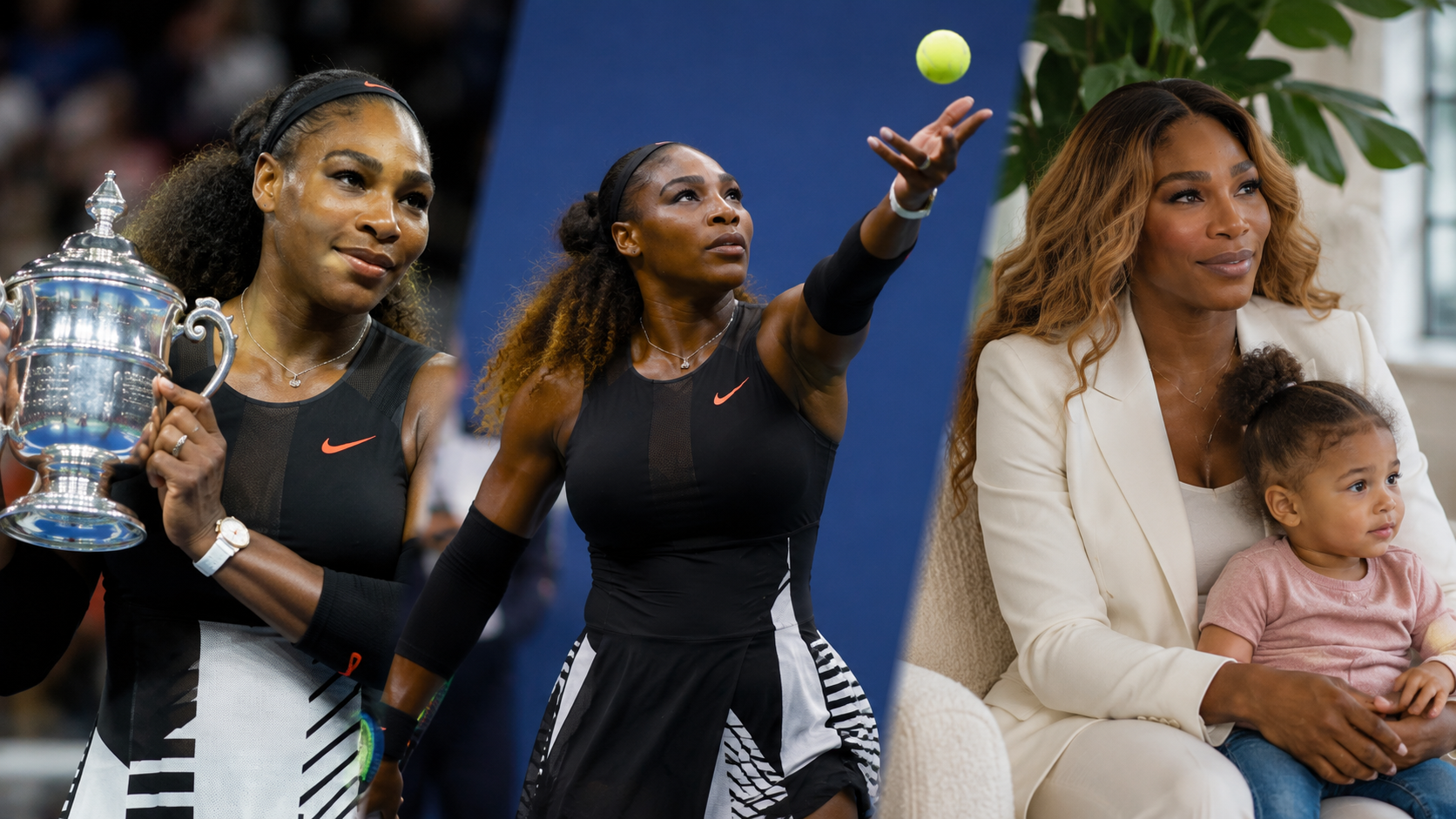
Serena Williams: The Full Story of a Tennis Icon
When people talk about the greatest athletes of the last fifty years, Serena Williams almost always comes up. She didn’t just win a lot of matches. She changed how women’s tennis is played, how female athletes are marketed, and how retired champions build second careers.
If you’ve searched her name, you’re probably looking for one of a few things: her stats, what she’s doing now, details about her family, or how her career actually unfolded. This article covers all of it in plain language, without the fluff.
Direct Answer
Serena Williams is a retired American professional tennis player widely considered the greatest female player in the sport’s history. She won 23 Grand Slam singles titles, 73 WTA singles titles, and 14 Grand Slam doubles titles with her sister Venus Williams. Born September 26, 1981, in Saginaw, Michigan, she turned pro in 1995, spent 319 weeks ranked world No. 1, and stepped back from full-time competition in 2022 to focus on family and business, including her venture capital firm, Serena Ventures.
Who Is Serena Williams?
Serena Jameka Williams grew up in Compton, California, trained by her father, Richard Williams, alongside her older sister Venus. The two sisters weren’t just training partners. They were part of a deliberate plan Richard Williams had mapped out before either of them picked up a racket, aiming to turn two young Black girls from a working-class neighborhood into world-class athletes in a sport that had historically excluded people who looked like them.
That background matters because it explains part of what made Serena’s game different. She played with a physicality and aggression that wasn’t the norm in women’s tennis at the time, and she backed it up with one of the most dominant serves the sport has ever seen.
Early Career and Rise to the Top
Serena turned professional in 1995 at just 14 years old. Her breakthrough came in 1999, when she won the US Open at age 17, beating Martina Hingis in the final. That win put her on the map, but it was only the beginning.
Over the next two decades, she built a rivalry with her own sister, faced down top players like Justine Henin and Maria Sharapova, and gradually became the player everyone else had to plan around. Her peak stretch, especially between 2002 and 2003 and again from 2012 through 2017, is considered one of the most dominant runs in tennis history.
Common misconception: Many assume Serena’s dominance came purely from power. In reality, her return of serve, court coverage, and mental toughness in high-pressure points were just as important as her serve speed. Power alone doesn’t win 23 majors; consistency under pressure does.
Career Achievements and Records
Here are the numbers that explain why Serena is discussed as the greatest women’s player ever, and in some debates, the greatest tennis player of either gender:
- 23 Grand Slam singles titles, the most of any player in the Open Era
- 73 WTA singles titles overall
- 14 Grand Slam doubles titles, all won with Venus Williams (the sisters never lost a Grand Slam doubles final together)
- 4 Olympic gold medals, including one in singles and three in doubles with Venus
- 319 total weeks ranked world No. 1, including a then-record 186 consecutive weeks
- Five year-end world No. 1 finishes
- A career Grand Slam, meaning she won all four majors (Australian Open, French Open, Wimbledon, US Open) at least once, a feat only ten women in history have achieved
Her only real target left was Margaret Court’s all-time record of 24 Grand Slam singles titles, set in 1973. Williams reached her 23rd major at the 2017 Australian Open, and injuries and life changes afterward kept that final record out of reach.
Why Her Career Matters Beyond the Trophies
Trophies tell part of the story, but Serena’s influence on tennis and sports culture goes further.
She helped normalize athletic, muscular female bodies in a sport that had often rewarded a narrower physical ideal. She was outspoken about equal pay in tennis, well before it became a mainstream conversation in sports media. She played through and spoke openly about postpartum depression and a life-threatening childbirth complication, which brought public attention to maternal health risks faced disproportionately by Black women in the United States.
That combination of on-court dominance and off-court advocacy is a big reason her name still carries weight even years removed from her final tournament.
The 2022 “Evolution” and What Came After
In August 2022, Serena announced in a Vogue essay that she was stepping away from professional tennis. Notably, she avoided the word “retirement,” describing it instead as an evolution toward other parts of her life, particularly growing her family. She played her final matches at the 2022 US Open, where she lost in the third round to Ajla Tomljanovic in an emotional send-off match.
For nearly four years afterward, Serena stayed out of professional competition, though she never fully closed the door. In interviews during that period, she said the odds of a comeback were real, even joking that she still had a tennis court at home.
That door reopened in June 2026, when Serena accepted a wildcard invitation to play doubles at the HSBC Championships at Queen’s Club in London, a grass-court event she said held special meaning for her career. Paired with world No. 9 Victoria Mboko, she won her opening match. She described the moment as the start of a new chapter rather than a full return to the tour, and it’s not yet clear how much competitive tennis she plans to play going forward.
Life Off the Court
Serena married Alexis Ohanian, co-founder of Reddit, in 2017. The couple has two daughters, Olympia and Adira. Serena has spoken candidly about balancing motherhood with her career, including how her older daughter’s wish for a sibling factored into her decision to step back from tennis.
Business has become a major part of her post-playing life. She founded Serena Ventures, a venture capital firm that has raised well over a hundred million dollars and invests in early-stage companies, with a focus on founders from underrepresented backgrounds. She has also kept a long list of endorsement deals, spanning apparel, wellness brands, and consumer products, and Nike named a building at its headquarters after her in 2022.
Common Mistakes People Make About Serena Williams
Assuming she fully retired in 2022. She deliberately avoided that word and returned to competitive doubles in 2026.
Confusing her Grand Slam total with the all-time record. Her 23 majors are the most of the Open Era (since 1968), but Margaret Court holds the all-time record with 24, achieved partly before the Open Era began.
Overlooking her doubles career. Her 14 Grand Slam doubles titles with Venus, all won without a single lost final together, are often left out of casual conversations about her legacy.
Thinking her business ventures started after tennis. Serena Ventures and other projects were already underway during her playing career, not launched only after she stepped back.
Key Facts
- Full name: Serena Jameka Williams
- Born: September 26, 1981, Saginaw, Michigan
- Turned pro: 1995
- Grand Slam singles titles: 23
- WTA singles titles: 73
- Grand Slam doubles titles: 14 (all with Venus Williams)
- Olympic gold medals: 4
- Weeks at world No. 1: 319
- Stepped back from full-time competition: 2022
- Returned to competitive doubles: June 2026
Frequently Asked Questions
How many Grand Slams has Serena Williams won? She has won 23 Grand Slam singles titles, the most of any player in the Open Era, along with 14 Grand Slam doubles titles.
Is Serena Williams still playing tennis? She stepped back from full-time competition in 2022 but returned to play doubles at a grass-court tournament in June 2026. She hasn’t committed to a full competitive schedule since then.
Why did Serena Williams retire? She described her decision as an evolution rather than a retirement, driven mainly by a desire to grow her family and focus on other ventures, including her venture capital firm.
Who is Serena Williams married to? She is married to Alexis Ohanian, co-founder of Reddit. They have two daughters, Olympia and Adira.
What is Serena Ventures? It’s a venture capital firm Serena Williams founded that invests in early-stage companies, with a particular focus on founders from underrepresented backgrounds.
Did Serena Williams ever hold the all-time Grand Slam record? No. Her 23 titles are the Open Era record, but Margaret Court’s 24 titles remain the all-time record across both the Open Era and the years before it.
Key Takeaways
- Serena Williams won 23 Grand Slam singles titles and 73 WTA singles titles across a career that began in 1995.
- She and her sister Venus Williams won 14 Grand Slam doubles titles together without ever losing a final as a pair.
- She stepped back from full-time tennis in 2022, calling it an evolution, and returned to competitive doubles in June 2026.
- Off the court, she’s built a venture capital firm, Serena Ventures, and remains active in business and philanthropy.
- Her influence on tennis extends beyond titles, touching pay equity, athlete body image, and public awareness of maternal health risks.
Conclusion
Serena Williams’ career is hard to summarize in a single sentence because it worked on so many levels at once. She won at a historic rate, she reshaped expectations for what a dominant female athlete could look like, and she kept building new chapters for herself once her playing days slowed down. Whether she plays another full season or not, her record and her influence on the sport are already settled.

Millions of people start their morning the same way: coffee in one hand, a pencil in the other, and a folded newspaper open to the puzzle page. For decades, the USA Today newspaper crossword has been part of that ritual. It shows up in print editions across the country and, more recently, inside a dedicated app that lets readers solve on their phones instead of at the kitchen table.
If you’ve ever wondered how this crossword differs from other daily puzzles, where to actually find it, or why some days feel so much harder than others, this guide walks through it all in plain language.
Direct Answer
The USA Today newspaper crossword is a daily puzzle published by USA TODAY, appearing in the print newspaper and through the USA TODAY PLAY Crosswords app and website. It’s known for being more approachable than puzzles like the New York Times crossword, using everyday vocabulary and pop-culture clues rather than obscure trivia. New puzzles are released every day, with an archive of past puzzles available to subscribers through the app.
What Is the USA Today Crossword?
The USA Today crossword is a standard grid-style word puzzle that runs daily in the newspaper’s puzzle section, alongside other syndicated features like Sudoku, Jumble, and various cryptogram puzzles. Unlike some crosswords that are built by a single, credited constructor for a specific outlet, USA Today’s puzzle is created by a rotating group of professional puzzle constructors and edited under the paper’s puzzle team.
The grid itself follows familiar American crossword conventions: a square grid (usually 15×15 for daily puzzles, larger on Sundays), black-and-white squares, and clues split into “Across” and “Down” categories. What sets it apart is tone. The clues tend to favor common knowledge, current pop culture, and lighter wordplay over the dense literary or historical references you might find in other major outlets.
Where to Find the USA Today Crossword
There are three main ways people access this puzzle:
- In print — Inside the physical newspaper’s puzzle page, often bundled with other games on the same spread.
- Through the USA TODAY PLAY Crosswords app — Available on iOS and Android, this app hosts the daily crossword along with a shorter “Quick Cross” version and a searchable puzzle archive going back years.
- Online through USA TODAY’s puzzle site — For readers who prefer solving on a browser rather than downloading an app.
Local and regional newspapers that syndicate content from USA TODAY sometimes republish the crossword alongside their own local puzzle offerings, which is why you may see it bundled with other papers’ puzzle solutions in shared roundup articles online.
How the Puzzle Works
Solving works the same way it does in any standard American-style crossword:
- Read the clue numbers. Each numbered square marks the start of an answer that runs either across or down.
- Fill in what you know first. Shorter words and clues you’re confident about help anchor the rest of the grid.
- Use crossing letters. Every letter in the grid belongs to two words, so a confirmed answer in one direction narrows down the possibilities in the other.
- Work the theme, if there is one. Weekday puzzles sometimes carry a light theme tying several long answers together, while Sunday puzzles are larger and often built around a wordplay concept.
- Check symmetry as a solving aid. Crossword grids are built with rotational symmetry, so noticing the pattern of black squares can hint at how long an answer needs to be.
The app version adds a few conveniences the print version doesn’t have: an option to reveal a letter or an entire word when you’re stuck, an autosave feature so you can pause and resume a puzzle, and stat tracking that shows your solving streaks and completion times over time.
Why the Puzzle Matters to Readers
Crosswords are more than a way to pass a few minutes. Regular solvers often mention that daily puzzles give them a small, low-stakes mental warm-up, similar to stretching before exercise. Because the USA Today crossword is intentionally written at a gentler difficulty than some competitors, it also serves as a common entry point for people who are newer to crosswords or who solve puzzles casually rather than competitively.
Newspapers continue to run crosswords, decades into the digital age, because the format has proven durable. It rewards a few minutes of attention, doesn’t require a screen, and creates a small daily habit that keeps readers returning to the same section of the paper (or the same app) every day.
Difficulty Level: What to Expect
One of the most common questions from new solvers is how hard the USA Today crossword actually is compared to other daily puzzles.
Generally speaking, the puzzle sits on the easier end of the daily crossword spectrum. Clues lean toward straightforward definitions rather than puns, and the puzzle’s editors have been open about wanting to keep the entry point accessible for solvers of all experience levels. That doesn’t mean it’s a pushover puzzle. Sunday editions, which are larger, take longer to complete and often include a wordplay theme running through the longest answers, adding a layer of challenge that weekday grids don’t have.
If you’ve found other major daily crosswords intimidating, this one is a reasonable place to build confidence before moving to trickier puzzles.
Common Misconceptions About the Puzzle
“It’s the same puzzle as the New York Times crossword.” These are separate publications with separate editorial teams and constructors. They share a format but not content, difficulty philosophy, or clue-writing style.
“You need a subscription to solve any of it.” Many local papers include the daily grid in a standard subscription, and the app offers a limited number of free puzzles before asking users to subscribe for full archive access — the exact terms have shifted over time, so it’s worth checking current app store listings for what’s included free versus behind a paywall.
“The puzzle never changes difficulty.” Difficulty can vary noticeably by day of the week, with puzzles generally easing up early in the week and building toward the larger Sunday grid.
“Digital and print versions are always identical.” While the daily grid is usually the same puzzle across formats, the app sometimes offers bonus content, like the Quick Cross mini-puzzle, that doesn’t appear in print at all.
Common Mistakes New Solvers Make
- Filling in a guess without checking the crossing letters. A word can look right and still be wrong if it doesn’t match the letters coming from the other direction.
- Ignoring the clue’s part of speech. If a clue is phrased as a verb, the answer usually needs to be a verb too, even if a noun would technically fit the blank spaces.
- Overlooking abbreviations in the clue. A clue ending in something like “for short” or written with a period signals that the answer itself is abbreviated.
- Skipping the theme clues. In themed puzzles, working out one themed answer often unlocks the logic behind the others.
- Getting stuck on one section too long. Moving to a different part of the grid and coming back later often breaks a mental block faster than staring at the same three squares.
Real-World Example
Imagine a weekday clue reads “Big Apple, familiarly” for a four-letter answer. A solver unfamiliar with the nickname might try random four-letter city abbreviations. But recognizing “Big Apple” as a well-known nickname for New York City points straight to NYC — except the clue asks for four letters, which should immediately signal the solver to reconsider, since NYC is only three letters. That small mismatch is exactly the kind of self-check that separates careful solving from guessing, and it’s the sort of clue style — familiar, conversational, culturally common — that the USA Today crossword tends to favor over more obscure references.
Key Facts
- The puzzle runs daily in print and digitally through the USA TODAY PLAY Crosswords app.
- <cite index=”3-1″>The app includes a daily crossword, a shorter “Quick Cross” format, a puzzle archive, hints, and progress tracking.</cite>
- <cite index=”5-1″>Beyond the crossword itself, the app also bundles other daily content like Sudoku, comics, and horoscopes.</cite>
- Sunday puzzles are larger than weekday puzzles and typically include a connecting theme.
- The puzzle is created by a rotating set of professional crossword constructors rather than one single author.
- Many local and regional papers syndicate the puzzle alongside their own local content.
Frequently Asked Questions
What is the USA Today crossword? It’s a daily word puzzle published by USA TODAY, appearing in the print newspaper and through the paper’s dedicated puzzle app and website.
How does the USA Today crossword work? Solvers fill in a grid using numbered Across and Down clues, with each letter shared between two intersecting answers.
Why is the USA Today crossword popular? It’s known for being more accessible than some other major daily crosswords, using everyday vocabulary and lighter wordplay, which makes it appealing to casual and newer solvers.
Is the USA Today crossword free to play? Access varies. Some versions are free with limits, while full archive access and certain app features may require a subscription. Check the current app listing for up-to-date pricing.
Is the puzzle the same every day of the week? No. Weekday puzzles are generally smaller and easier, while Sunday puzzles are larger and often built around a wordplay theme.
What are some alternatives to the USA Today crossword? Other well-known daily crosswords include the New York Times crossword, the LA Times crossword, and various syndicated puzzles distributed by companies like Andrews McMeel and Tribune Content Agency.
What should a new solver know before starting? It helps to know basic crossword conventions: clues are split into Across and Down, answers cross each other, and clue phrasing (like “for short” or a question mark) often signals wordplay or abbreviation.
Key Takeaways
- The USA Today crossword is a daily puzzle available in print and through the USA TODAY PLAY Crosswords app.
- It’s generally considered more approachable than some other major daily crosswords, though Sunday editions add extra size and theme complexity.
- The app adds digital-only conveniences like hints, autosave, and a puzzle archive.
- Common solving mistakes include ignoring crossing letters, missing part-of-speech clues, and getting stuck on one section too long.
- The puzzle is distinct from other newspapers’ crosswords, even though it follows the same general format.
Conclusion
The USA Today newspaper crossword has held its place in daily routines by staying true to a simple idea: a crossword doesn’t need to be intimidating to be satisfying. Whether you’re solving it folded open on a table with a pen or tapping through it on your phone during a commute, the puzzle offers a short, structured mental break that fits into almost any schedule. Understanding how it’s built, where to find it, and what mistakes to avoid makes that daily few minutes go a little smoother.
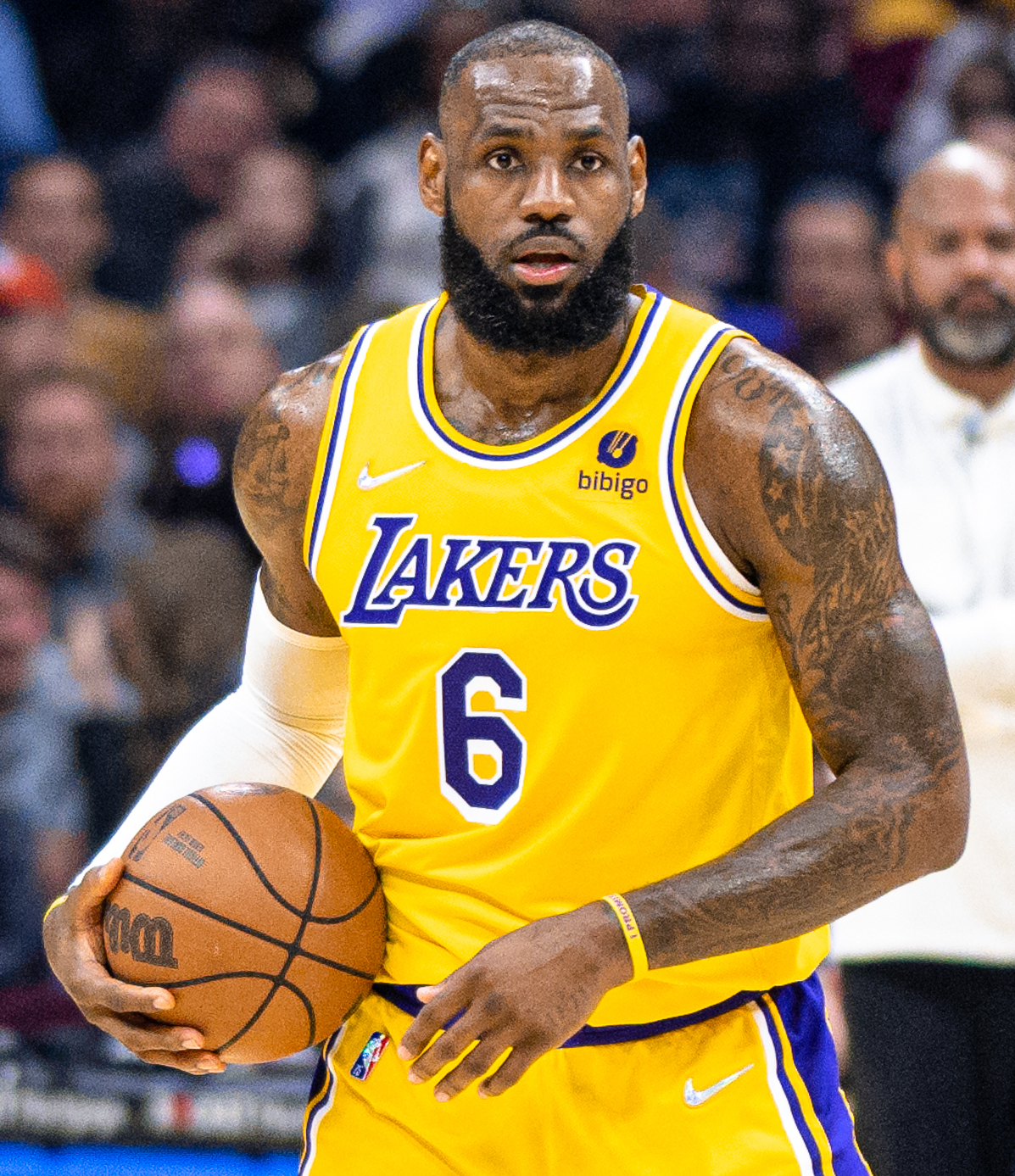
Few names carry as much weight in American sports as LeBron James. For more than two decades, he has been a fixture in the NBA, and his career has become a reference point for conversations about greatness, longevity, and what it means to build a legacy on and off the court. People search for information about him for a lot of different reasons — some want to understand his stats, others are curious about his business ventures, and many just want to know what makes him different from other basketball legends.
This guide breaks down who LeBron James is, how his career developed, what he has accomplished, and why he remains one of the most discussed athletes in the world.
Direct Answer
LeBron James is an American professional basketball player widely regarded as one of the greatest players in NBA history. Drafted first overall by the Cleveland Cavaliers in 2003, he has won four NBA championships, four NBA Finals MVP awards, four NBA MVP awards, and became the league’s all-time leading scorer in 2023. Known for his combination of size, speed, and basketball IQ, James has played for the Cavaliers, Miami Heat, and Los Angeles Lakers over a career spanning more than 20 seasons.
Who Is LeBron James?
LeBron Raymone James Sr. was born on December 30, 1984, in Akron, Ohio. He grew up in a single-parent household and faced financial hardship as a child, moving frequently before his basketball talent brought stability to his life. By the time he reached St. Vincent–St. Mary High School, he was already drawing national attention, appearing on magazine covers before he had even played a professional game.
That early hype could have easily become a burden. Instead, James turned it into motivation, and the Cleveland Cavaliers selected him with the first overall pick in the 2003 NBA Draft. He was 18 years old.
Understanding LeBron’s background matters because it explains part of his approach to the game and to life after basketball. He has spoken often about using his platform to support education and community development, most notably through the “I Promise School” he helped establish in Akron for at-risk children.
Early Career and Rise to Stardom
James entered the NBA with enormous expectations, and unlike many highly touted prospects, he largely met them. He won Rookie of the Year in his first season and quickly became the focal point of the Cavaliers’ offense.
By his fourth season, he had led Cleveland to its first NBA Finals appearance, though the team was swept by the San Antonio Spurs. Over the following years, James established himself as a perennial MVP candidate, known for his rare blend of size (6-foot-9, roughly 250 pounds) and speed, along with a basketball IQ that let him read defenses and set up teammates like a point guard.
This period built the foundation for his reputation as an all-around player rather than a pure scorer. He could fill a box score in ways few players before him had managed consistently.
The Miami Heat Years
In 2010, James made a decision that reshaped the league. He left Cleveland to join the Miami Heat, teaming up with Dwyane Wade and Chris Bosh in what became known as basketball’s first modern “superteam.” The move was controversial at the time — Cleveland fans felt betrayed, and James faced significant public criticism.
Whatever the reaction, the results were hard to argue with. The Heat reached four straight NBA Finals from 2011 to 2014, winning back-to-back championships in 2012 and 2013. During this stretch, James won two more MVP awards and cemented his place among the league’s top players.
This chapter of his career illustrates something important for readers trying to understand the broader NBA landscape: player movement and team-building strategy became more central to league storylines after James’s decision, influencing how future stars approached free agency.
Return to Cleveland and the 2016 Championship
In 2014, James announced he would return to the Cavaliers, framing the decision as a chance to bring a championship to his home state. Cleveland had never won an NBA title, and the city had gone through decades of sports disappointment across multiple leagues.
James delivered. In 2016, the Cavaliers faced the Golden State Warriors — a team that had just set the NBA record for regular-season wins — in the Finals. Cleveland fell behind three games to one, a deficit no team had ever overcome in Finals history. James led the comeback, and the Cavaliers won the championship, breaking Cleveland’s title drought.
Many analysts consider this the signature achievement of his career, not just because of the championship itself, but because of the circumstances: an underdog comeback against a historically great opponent, delivered for the city where his story began.
The Los Angeles Lakers Era
James joined the Los Angeles Lakers in 2018, a move that shifted his focus toward both basketball and business, given the city’s media and entertainment landscape. In 2020, he led the Lakers to another championship, winning his fourth Finals MVP award in a season played largely in a controlled “bubble” environment due to the COVID-19 pandemic.
Beyond the championship, his Lakers tenure has been notable for milestones that speak to his longevity. In February 2023, James passed Kareem Abdul-Jabbar to become the NBA’s all-time leading scorer, a record many assumed would stand for generations. In March 2024, he became the first player in league history to reach 40,000 career points.
During the 2025-26 season, James continued playing at a productive level into his early forties, <cite index=”2-1″>averaging 20.9 points, 7.2 assists, and 6.1 rebounds across 60 games while earning his twenty-second All-Star selection</cite> — an extraordinary statistic given how few players remain effective NBA contributors past age 40. As of mid-2026, James’s playing future is a major offseason storyline: <cite index=”3-1″>reports indicate he informed the Lakers that he plans to play for a different team in what would be his 24th NBA season</cite>, though no final decision had been publicly confirmed at the time of this writing. Readers following his career should expect this situation to keep evolving and should check current sports news for the latest update.
Playing Style and On-Court Skills
What separates LeBron James from many of his peers is versatility. He is not defined by a single elite skill the way some superstars are. Instead, his game is built on a combination of strengths:
- Size and athleticism: His frame allows him to guard multiple positions and finish through contact near the basket.
- Court vision: He often ranks among assist leaders despite not being a traditional point guard, reading double-teams and finding open teammates quickly.
- Basketball IQ: Coaches and teammates frequently cite his ability to process the game at a level that lets him anticipate plays before they develop.
- Durability: Playing more than 20 NBA seasons at a high level requires conditioning and injury management that few athletes sustain.
This combination is why he’s often discussed as a positionless player — someone capable of playing forward, guarding centers on switches, or initiating offense like a guard, depending on what a given game requires.
Key Records and Achievements
James’s résumé includes accomplishments across nearly every meaningful statistical and team category in NBA history:
- All-time leading scorer in NBA regular-season history
- Four NBA championships (2012, 2013, 2016, 2020)
- Four NBA Finals MVP awards
- Four NBA Most Valuable Player awards
- More than 20 NBA All-Star selections
- Two Olympic gold medals with Team USA
- First player to reach 40,000 career regular-season points
- Most career games played in NBA history
These numbers matter, but they only tell part of the story. What stands out to many analysts is the sustained level of performance across such a long career, rather than any single record.
Common Misconceptions About LeBron James
Misconception: He only succeeded because he played with other stars. While James has played alongside talented teammates throughout his career, so have nearly all championship-caliber players in NBA history. Team success in basketball almost always depends on multiple contributors, and James has been the offensive and defensive centerpiece on every title team he’s played for.
Misconception: His move to Miami in 2010 hurt his legacy. At the time, the decision was widely criticized. In hindsight, most analysts view it as a smart competitive and business decision that led directly to two championships and helped James develop as a more complete player.
Misconception: He’s purely a scorer. James actually ranks among the NBA’s all-time leaders in assists as well as points, a combination almost no other player in league history has matched. His passing and playmaking are core parts of his game, not secondary skills.
LeBron James Off the Court
James’s influence extends well beyond basketball. He has built business ventures in media production, investment, and entertainment, and he has been vocal about social and political issues, particularly around voting access and education.
The “I Promise School” in Akron, which he helped fund through his foundation, focuses on supporting at-risk students and their families with resources beyond the classroom, including job training and support for parents. This kind of community investment is often cited as part of his broader public identity, separate from his on-court accomplishments.
Why LeBron James Matters in Basketball History
Discussions about the greatest basketball player of all time usually include James alongside Michael Jordan, and the comparison itself reflects how significant his career has been. Jordan supporters typically point to a perfect 6-0 Finals record and peak dominance. James supporters point to statistical volume, longevity, positional versatility, and success across three different franchises.
There’s no single, objective answer to who is “better” — it depends on which criteria matter most to the person evaluating it. What is not in dispute is that James has changed how people think about longevity in professional sports, showing that elite performance doesn’t have to fade sharply after age 35, as it typically did for stars of earlier basketball generations.
Key Facts About LeBron James
- Born December 30, 1984, in Akron, Ohio
- Drafted first overall by the Cleveland Cavaliers in 2003
- Has played for the Cavaliers, Miami Heat, and Los Angeles Lakers
- NBA’s all-time leading scorer
- Four-time NBA champion and four-time Finals MVP
- First player to reach 40,000 career points
- Founder of the “I Promise School” in Akron, Ohio
Frequently Asked Questions
What is LeBron James known for? He’s known for being the NBA’s all-time leading scorer, a four-time champion, and one of the most statistically complete players in basketball history, combining scoring, passing, and defense at an elite level for more than two decades.
How many championships does LeBron James have? He has won four NBA championships: one with the Miami Heat in 2012, another with Miami in 2013, one with the Cleveland Cavaliers in 2016, and one with the Los Angeles Lakers in 2020.
Why did LeBron James leave Cleveland for Miami? He left in 2010 to team up with Dwyane Wade and Chris Bosh, seeking a better chance to win championships. The decision, announced during a televised special, was controversial at the time but led to back-to-back titles.
Is LeBron James the greatest player of all time? That’s a matter of ongoing debate rather than settled fact. He is consistently ranked among the top two or three players in NBA history, usually compared most directly to Michael Jordan, but there’s no universal consensus on who holds the top spot.
How old is LeBron James and is he still playing? Born in December 1984, James has continued playing into his early forties, an unusual level of longevity for an NBA player. His team situation heading into future seasons has been a subject of ongoing sports news coverage, so readers should check current reporting for his latest status.
What records does LeBron James hold? He holds the NBA’s all-time regular-season scoring record and is the first player to reach 40,000 career points, among other career-longevity records related to games played and seasons in the league.
Key Takeaways
- LeBron James is the NBA’s all-time leading scorer and a four-time league champion.
- He has played for the Cleveland Cavaliers, Miami Heat, and Los Angeles Lakers across more than 20 seasons.
- His game is defined by a rare combination of size, playmaking, and basketball IQ rather than a single standout skill.
- Comparisons between James and Michael Jordan remain a common but unresolved debate in basketball culture.
- Beyond basketball, James has built a public profile around education initiatives and business ventures.
Conclusion
LeBron James’s career reflects a rare combination of talent, adaptability, and endurance. From his early years in Akron to becoming the NBA’s all-time scoring leader, his story offers a useful lens for understanding how the league itself has changed over the past two decades — in player movement, team-building, and what long-term excellence can look like in professional sports. Whatever conclusions readers draw about where he ranks historically, his impact on basketball is well documented and continues to unfold.


USA Today Newspaper Crossword: The Complete Guide to Playing Solving and Understanding It

Serena Williams: Career Records and Life After Tennis

Who Is LeBron James? A Complete Guide to His Career Records and Legacy

Best AI Lip Sync Tools of 2026: Top Picks for Creators, Marketers, and Video Editors
USA Today Newspaper Crossword: The Complete Guide to Playing Solving and Understanding It
Who Is LeBron James? A Complete Guide to His Career Records and Legacy
-
 Tech3 weeks ago
Best AI Lip Sync Tools of 2026: Top Picks for Creators, Marketers, and Video Editors
-
 Politics3 days ago
USA Today Newspaper Crossword: The Complete Guide to Playing Solving and Understanding It
-
 Politics4 days ago
Who Is LeBron James? A Complete Guide to His Career Records and Legacy
-

 Fashion4 days ago
Who Is Prince Harry? A Complete Guide to His Life Titles and Role Today