










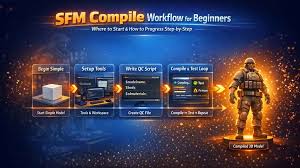
In the evolving landscape of digital technology, efficiency and precision are paramount. SFM compile has emerged as a critical tool for developers, startups, and tech enterprises looking to optimize workflows and deliver high-quality software solutions. By simplifying compilation processes, improving build reliability, and integrating seamlessly with modern development environments, SFM compile enables teams to focus on innovation rather than troubleshooting technical bottlenecks.
For entrepreneurs and tech professionals, understanding SFM compile is not just about mastering a tool—it’s about leveraging a system that can accelerate project timelines, improve collaboration, and ultimately impact the bottom line. This article explores how SFM compile works, its key features, real-world applications, and the future of digital development it helps shape.
What is SFM Compile and Why It Matters
At its core, SFM compile is a compilation framework designed to convert source code into executable programs efficiently. Unlike traditional compilers, SFM compile is optimized for modern development workflows, supporting multiple platforms, languages, and build configurations. Its versatility makes it suitable for startups, tech firms, and enterprises where reliable, fast, and error-free compilation is crucial.
The importance of SFM compile extends beyond speed. By automating repetitive tasks, detecting inconsistencies, and integrating with continuous integration/continuous deployment (CI/CD) pipelines, it ensures that development teams maintain code quality and adhere to best practices. This reliability is especially valuable in fast-paced environments where deployment speed and software stability directly influence business success.
Key Features of SFM Compile
The power of SFM compile lies in its robust feature set, designed to enhance productivity and streamline software development.
| Feature | Description | Benefit |
| Multi-Platform Support | Compatible with various operating systems and programming languages | Expands development flexibility and reduces compatibility issues |
| Incremental Compilation | Only recompiles changed modules | Saves time and accelerates development cycles |
| Error Detection & Debugging | Identifies inconsistencies and potential build failures | Reduces risk of runtime errors and improves code quality |
| CI/CD Integration | Seamlessly connects with popular CI/CD tools | Facilitates automated testing and deployment |
| Performance Optimization | Produces efficient, optimized executables | Enhances application speed and reduces resource consumption |
These features make SFM compile an indispensable tool for developers and organizations aiming to deliver software efficiently without compromising on quality.
How Startups Can Leverage SFM Compile
Startups often operate under tight timelines and resource constraints, making efficient development processes essential. SFM compile helps these teams by automating compilation tasks, ensuring error-free builds, and allowing developers to focus on coding and innovation rather than debugging.
For instance, a SaaS startup preparing to release a new platform can use SFM compile to automate the build process, detect issues early, and streamline deployment. This not only accelerates time-to-market but also ensures the reliability and performance of the application, helping the startup establish credibility and gain customer trust.
SFM Compile in Enterprise Development
Enterprises face additional challenges, including large-scale codebases, multiple development teams, and complex deployment pipelines. Here, SFM compile demonstrates its value by providing scalable, reliable compilation that supports collaboration across departments and projects.
By integrating SFM compile with existing CI/CD pipelines, enterprises can achieve automated, incremental builds, maintain code consistency, and reduce downtime. The result is higher productivity, fewer errors in production, and a more agile development process that aligns with business objectives.
Real-World Applications and Case Studies
Several organizations have reported significant improvements after adopting SFM compile. A mid-sized fintech company, for example, reduced compilation times by 40%, allowing developers to iterate faster and deploy updates more frequently. Similarly, a gaming software studio leveraged SFM compile’s error detection to minimize runtime bugs, improving user experience and reducing post-launch patches.
These examples illustrate that SFM compile is more than a technical tool—it is a strategic enabler that improves efficiency, reduces risk, and enhances overall software quality.
The Future of SFM Compile
As software development becomes increasingly complex, the need for efficient, reliable, and scalable compilation tools will continue to grow. SFM compile is evolving with this trend, integrating advanced features such as AI-assisted error detection, predictive build optimization, and enhanced multi-platform compatibility.
For startups and enterprises alike, adopting SFM compile early offers a competitive advantage, allowing teams to innovate faster, maintain higher quality standards, and respond effectively to market demands. Its user-centric design ensures that even developers with varying experience levels can leverage its full potential.
Conclusion
In a competitive digital landscape, efficiency and reliability in software development are non-negotiable. SFM compile provides a comprehensive solution that combines speed, accuracy, and automation to transform how startups and enterprises develop, test, and deploy software. By streamlining compilation processes and integrating seamlessly into modern development workflows, SFM compile empowers teams to focus on innovation, reduce errors, and deliver high-quality products faster. For technology-driven businesses, mastering SFM compile is more than a technical advantage—it’s a strategic imperative.